
Pilates is often shown on a mat, with legs in the air. You do not need that to borrow its best habits. In a chair you can practice breathing with movement, sitting and standing taller, and moving the spine in small, controlled ranges. Those are useful skills for getting up from a chair, reaching into a cupboard or turning to look behind you.
Treat this as one part of a week, not the whole plan. Adults 65 and older are advised to combine aerobic activity, muscle-strengthening on at least two days, and balance activities (CDC). Chair pilates fits next to those, for example on a day when you also walk, or as a calm warm-up before chair strength exercises.
Before you start
- Use a stable chair without wheels or armrests that get in the way. Sit near the front edge with your feet flat and hip-width apart.
- Breathe out during the effort and breathe in as you return. Never hold your breath.
- Move slowly. Small, smooth ranges are the point. If a movement pinches or hurts, make it smaller or skip it.
- If you have osteoporosis or a back condition, ask your clinician about roll-downs and twists first. Some people are advised to limit deep forward bending and twisting.
9 chair pilates exercises
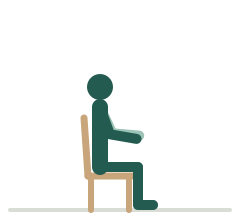
1.Set-up: tall sitting and breathing
Sit near the front of the chair, feet flat. Imagine a string lifting the top of your head. Rest your hands on your thighs and breathe slowly into the sides of your ribs.
- Take 5 slow breaths.
- Let the shoulders stay soft and low.
- Return to this position between exercises.
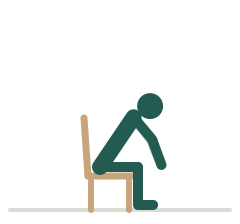
2.Seated roll-down
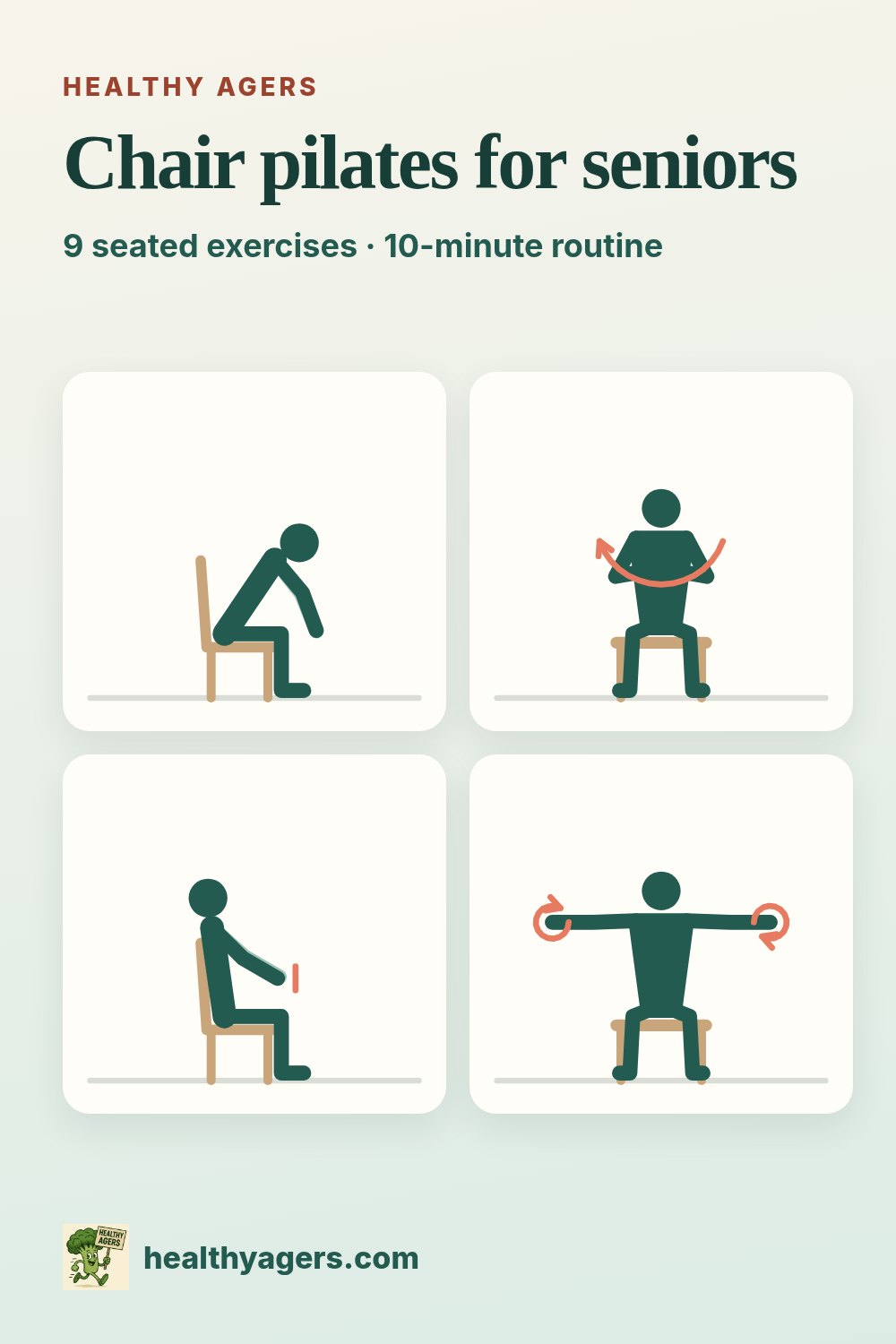
Breathe in to sit tall. Breathe out and let your chin drop, then curl forward slowly, one section of the back at a time, hands sliding toward your knees. Breathe in, then roll back up to tall sitting.
- Beginner: curl only a few inches, 4 times.
- Progression: slower, with a pause at the bottom, 6 times.
- Skip if forward bending is not advised for you.
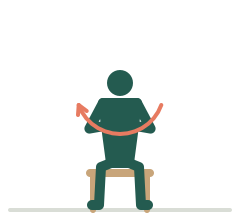
3.Seated spine twist
Cross your arms over your chest. Sit tall, breathe out and turn your upper body gently to one side, keeping knees pointing forward. Breathe in to come back to center.
- Beginner: a small turn, 3 per side.
- Progression: hold for one breath at the end of the turn.
- Keep the hips still; the turn comes from the upper back.
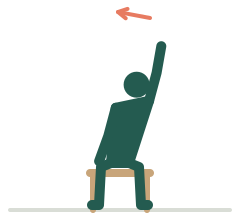
4.Seated side bend
Rest one hand on the chair. Reach the other arm up and gently over to the side, as if reaching over a ball. Return slowly. Switch sides.
- Beginner: 3 per side, small range.
- Progression: 4 to 5 per side with one breath at the top.
- Keep both sitting bones on the chair.
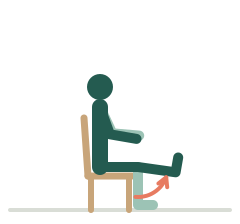
5.Leg lift with toe point
Sit tall and hold the chair sides. Straighten one knee until the leg is nearly level. Point the toes, then flex them back. Lower slowly.
- Beginner: 5 per leg.
- Progression: 8 per leg, or 2 point-and-flex moves each time.
- Keep the back tall instead of leaning back.
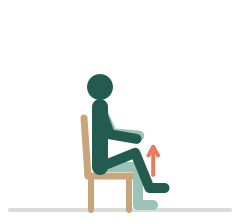
6.Seated marching with a tall spine
Hold the chair sides. Lift one knee a few inches, lower it, then lift the other. Keep the trunk still and tall while the legs move.
- Beginner: 30 seconds.
- Progression: 45 to 60 seconds, or a slow 2-second lift.
- The goal is a quiet upper body, not high knees.
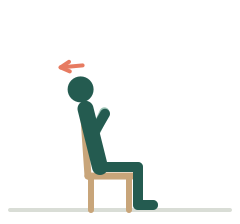
7.Seated lean-back
Sit near the front of the chair with arms crossed. Breathe out and hinge back slightly with a long spine, only as far as you can control. Breathe in and return.
- Beginner: lean back 1 to 2 inches, 4 times.
- Progression: 6 times with a 2-second hold.
- Keep your feet planted; stop if your back complains.
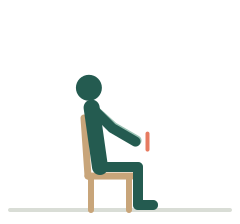
8.Chair hundred breathing
A seated version of a classic pilates exercise. Sit tall, arms long and low beside you. Make small up-and-down pulses with the arms while you breathe in for 5 pulses and out for 5 pulses.
- Beginner: 20 pulses.
- Progression: 40 to 50 pulses, building over weeks.
- Keep the pulses small and the neck relaxed.
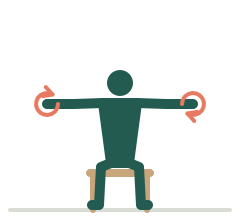
9.Arm circles and chest opener
Lift both arms out to the sides at a comfortable height. Make 5 small circles forward and 5 back. Then lower the arms, reach your hands behind you and gently open the chest for two breaths.
- Beginner: arms lower, 3 circles each way.
- Progression: 8 circles each way.
- Lower the arms any time the shoulders tire.
A 10-minute chair pilates routine
| Time | Exercise | Amount |
|---|---|---|
| 0:00–1:00 | Tall sitting and breathing | 5 slow breaths |
| 1:00–2:00 | Seated roll-down | 4 to 6 |
| 2:00–3:00 | Seated spine twist | 3 to 4 per side |
| 3:00–4:00 | Seated side bend | 3 to 4 per side |
| 4:00–5:30 | Leg lift with toe point | 5 to 8 per leg |
| 5:30–6:30 | Seated marching, tall spine | 30 to 45 seconds |
| 6:30–7:30 | Seated lean-back | 4 to 6 |
| 7:30–8:30 | Chair hundred breathing | 20 to 40 pulses |
| 8:30–10:00 | Arm circles and chest opener | 5 circles each way, 2 breaths |
Rest whenever you need to. Two or three sessions a week is a good start; on other days, take a walk or try the low-impact cardio routine.
Make it easier or harder
Easier
Smaller ranges, fewer repetitions, hands on the chair for every exercise, and more rest.
Steady
The full routine once, with slow breathing and the amounts in the table.
Harder
Slower movements, short holds at the end of each move, or the routine twice. Add a light band from our resistance band guide for arm work.
Safety notes
- Stop for chest pain, faintness, unusual shortness of breath, or sudden joint pain, and seek appropriate medical help.
- If you have osteoporosis, a recent surgery, dizziness, or a fall history, ask a clinician or physical therapist how to adapt these movements.
- Use a sturdy chair without wheels. Put it against a wall if it slides.
- Ordinary muscle effort is fine. Sharp or worsening pain is a signal to stop.
Where to go next
Pair this routine with core exercises for seniors (seated and standing), the free printable chair exercise sheet, or gentle yoga for seniors. If you want strength work next, the strength training guide has a simple weekly plan.
FAQ
Is chair pilates good for seniors?
It can be a gentle way to practice posture, breathing and trunk control while seated. It works best as one part of a week that also includes walking or other aerobic activity, strength work and balance practice.
Do I need pilates experience?
No. Each exercise here starts small. Move slowly, breathe out during the effort, and keep the range comfortable.
How often should I do chair pilates?
Two or three times a week is a realistic start. The 10-minute routine can also be a warm-up before chair strength exercises.
Is chair pilates safe with osteoporosis or back pain?
Ask your clinician or physical therapist first. Some people are advised to limit deep forward bending and twisting, so you may need to skip or adapt the roll-down and twist.