
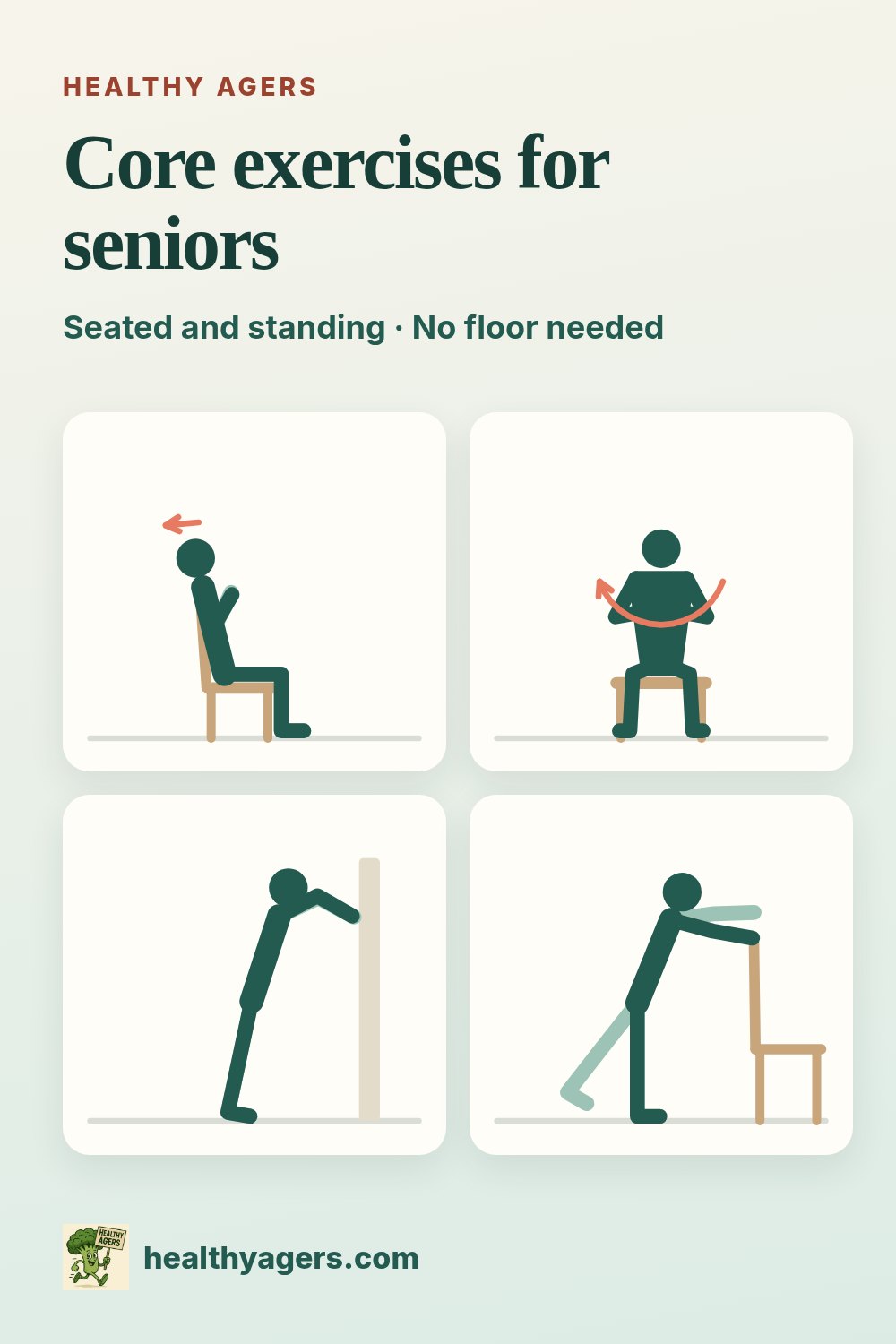
Many core workouts start on the floor with crunches and planks. That is a problem if getting down and back up is hard, or if lying flat is uncomfortable. For beginners, seated and standing core exercises make more sense: they train the trunk in the positions you actually use, and they work together with balance.
If you searched for stomach exercises for seniors, these are the same muscles. The aim here is not a flat stomach; it is a trunk that helps you sit tall, carry a bag, turn to look behind you and recover when you lose your balance a little.
How to brace gently
Sit or stand tall. Breathe in. As you breathe out, gently draw your belly button toward your spine, as if zipping up snug trousers. You should still be able to breathe and talk. Keep that light tension during each exercise and never hold your breath.
Seated core exercises
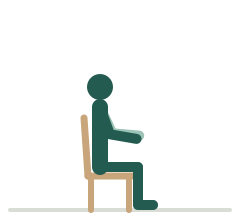
1.Tall sitting hold
Sit near the front of a sturdy chair without leaning on the backrest. Feet flat, hands on thighs. Brace gently and sit as tall as you comfortably can.
- Beginner: 3 holds of 15 seconds.
- Progression: 30 seconds, or lift the hands off the thighs.
- Breathe slowly the whole time.
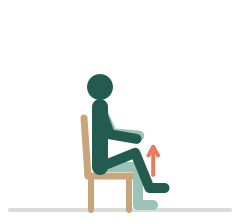
2.Seated knee lift
Hold the chair sides. Brace, then lift one knee a few inches and lower it slowly. Alternate legs while keeping the trunk still.
- Beginner: 5 per leg.
- Progression: 8 to 10 per leg, slower, or hands off the chair.
- If the back rounds, make the lift smaller.
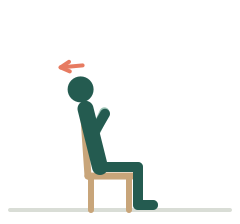
3.Seated lean-back
Sit near the front of the chair, arms crossed. Breathe out and lean back a little with a long spine, only as far as you can control. Return to upright.
- Beginner: 1 to 2 inches, 5 times.
- Progression: hold 3 seconds at the back.
- Keep your feet flat on the floor.
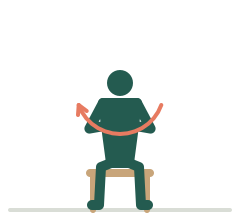
4.Seated rotation
Cross your arms over your chest. Sit tall and turn your upper body slowly to one side, then back to center and to the other side. Knees stay pointing forward.
- Beginner: 4 per side, small range.
- Progression: a slower turn with a 2-second pause.
- Ask a clinician first if twisting is not advised for you.
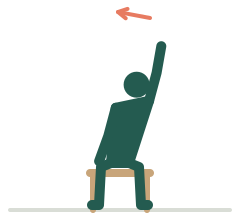
5.Seated side bend
Rest one hand on the chair. Reach the other arm up and over to the side, then return to tall sitting using your side muscles.
- Beginner: 4 per side.
- Progression: 6 per side with a short pause at the top.
- Both sitting bones stay on the seat.
Standing core exercises (with support)
Standing core work also trains balance. Keep a sturdy chair or kitchen counter within reach for every exercise.
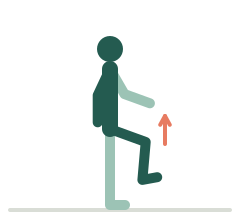
6.Standing march
Stand tall near a counter, brace gently, and march slowly in place. Try not to let the body sway side to side.
- Beginner: 20 to 30 seconds holding the counter.
- Progression: lighter hand support, slower lifts.
- This is also a balance exercise.
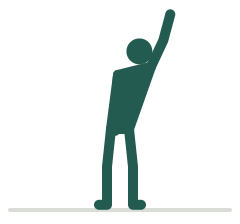
7.Standing side bend
Stand with feet hip-width apart. Slide one hand down the side of your thigh, then come back up tall. Switch sides.
- Beginner: 4 per side.
- Progression: one arm reaching overhead as you bend.
- Move slowly; it is not a stretch you bounce into.
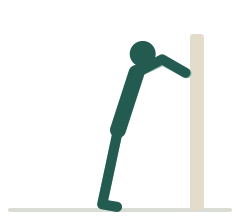
8.Wall press hold
Place your hands on a wall at chest height and step back until you lean slightly. Brace and hold a straight line from head to heels, like a standing plank.
- Beginner: 3 holds of 10 seconds.
- Progression: 20 to 30 seconds, or step a little farther back.
- Add a few wall push-ups when holds feel easy.
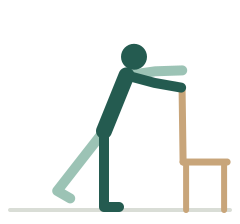
9.Standing reach-back
Hold a chair with one hand. Reach the other arm forward while sliding the opposite leg back, toes on the floor or just lifted. Return and switch.
- Beginner: 4 per side with toes touching the floor.
- Progression: lift the back foot slightly, 6 per side.
- Keep the hips level and the back long.
Three levels
Level 1
The five seated exercises, once through, with rests. Two or three days a week.
Level 2
Seated exercises plus the standing march and wall press hold, holding support.
Level 3
All nine exercises, slower, with longer holds and lighter hand support. Two rounds if you feel good.
Core and balance work together
A steady trunk helps you keep your balance when you reach, turn or step. Pair these exercises with the balance exercises for seniors and the free balance sheet. For a calmer, breathing-focused version, try chair pilates. Muscle-strengthening activity that works major muscle groups, including the abdomen and back, is recommended on at least two days a week for older adults (CDC); bands from the resistance band guide add more options.
Safety notes
- Stop for chest pain, faintness, unusual shortness of breath, or sudden joint pain, and seek appropriate medical help.
- If you have osteoporosis, a recent surgery, dizziness, or a fall history, ask a clinician or physical therapist how to adapt these movements.
- Use a sturdy chair without wheels. Put it against a wall if it slides.
- Ordinary muscle effort is fine. Sharp or worsening pain is a signal to stop.
Floor exercises such as planks and bridges can be added later, but only once getting down and up again feels safe, ideally after a physical therapist or trainer has shown you how.
FAQ
What are the best core exercises for seniors?
For beginners, seated and standing exercises such as tall sitting holds, seated knee lifts, seated lean-backs, standing marches and wall press holds. They train the trunk without floor work.
Can seniors do core exercises sitting down?
Yes. Five of the nine exercises on this page are seated. A sturdy chair without wheels is all you need.
How often should I do core exercises?
Two or three days a week is a good start, on non-consecutive days. Short, controlled sessions are better than long ones you dread.
Are crunches safe for older adults?
They are not necessary to train the core, and they may not suit everyone, for example people with osteoporosis or back problems. Ask a clinician before adding floor exercises.