
Talk to your doctor or physical therapist before you start, especially if a joint is hot, swollen or newly painful, if you have had a joint replacement or recent surgery, or if you have inflammatory arthritis such as rheumatoid arthritis. They can tell you which movements suit your joints. This page is general training advice, not treatment, and it does not promise to relieve or cure arthritis.
CDC states that physical activity is safe for people with arthritis, and that for many people it can help reduce joint pain and improve function and mood. The recommended amounts are the same as for other adults: at least 150 minutes a week of moderate activity and at least two days of muscle-strengthening, in sessions as short as 5 to 10 minutes if that is easier.
Three kinds of exercise
- Range of motion: gentle movements that take each joint through a comfortable range. The Arthritis Foundation suggests these daily.
- Strengthening: stronger muscles help support joints. The Arthritis Foundation suggests every other day; choose a resistance that does not cause joint pain (CDC).
- Low-impact aerobic activity: CDC lists brisk walking, cycling, swimming, water exercise, dancing, tai chi and light gardening as joint-friendly choices.
How to pace sore days
- Start low and go slow. Begin with a few repetitions and add a little at a time.
- Some soreness can be normal at first. CDC notes that some pain, stiffness or swelling can happen after starting a new program and should get better. If it does not, contact your health care provider.
- The two-hour guide. If joint pain lasts more than two hours after exercise, you probably did too much. Do less, or go more gently, next time (Arthritis Foundation).
- Stop for sharp pain, a joint that suddenly swells or gives way, chest pain, severe shortness of breath or dizziness.
- On flare days, keep to gentle range-of-motion and save strength work for another day.
- Pick your time. Many people find a time of day when joints feel less stiff. A warm shower before exercise may help you feel looser.
Gentle exercises to try
Do these slowly, within a comfortable range. Move until you feel a mild stretch or effort, not pain.
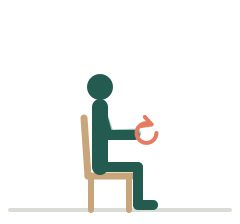
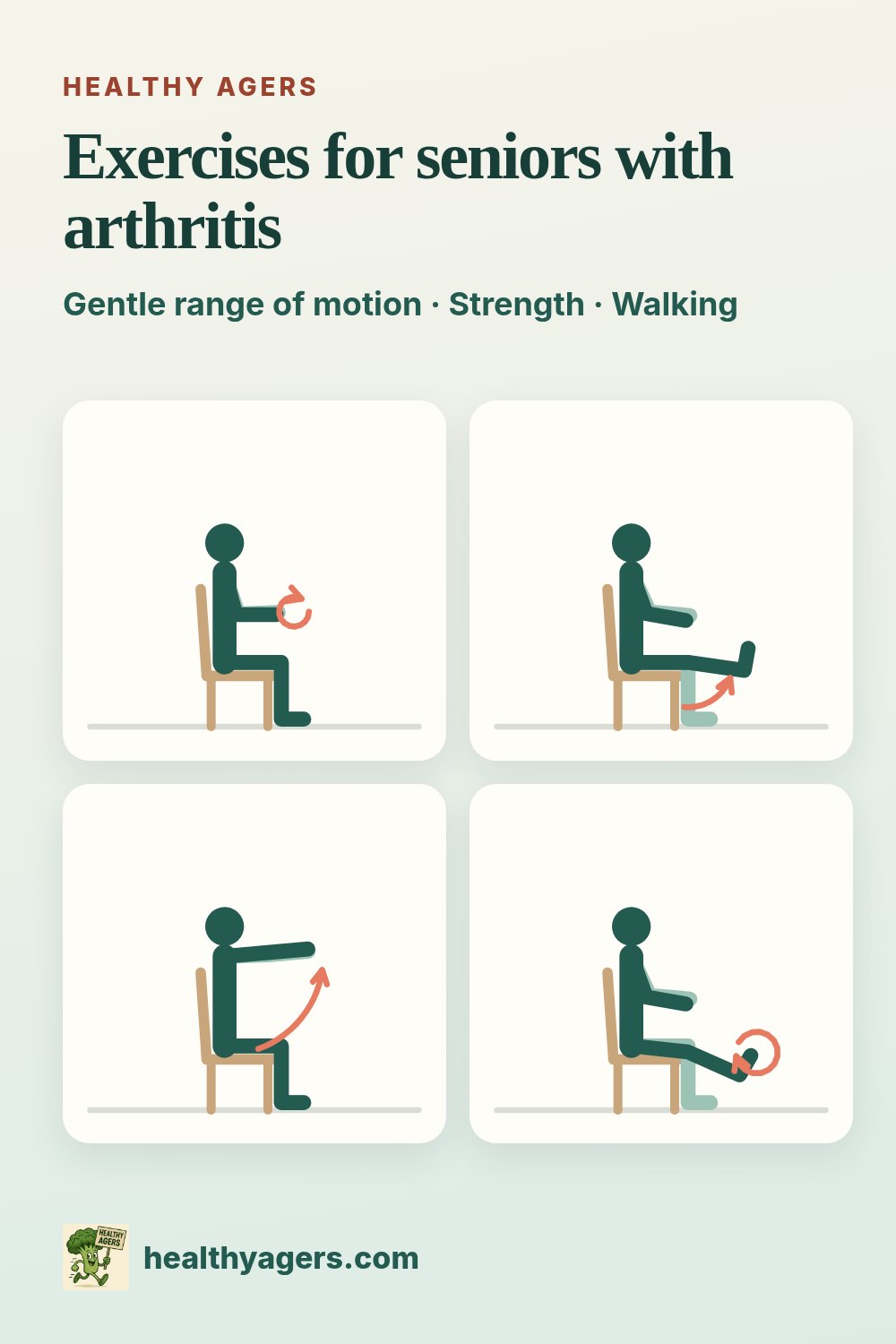
1.Hand and wrist circles
Rest your forearms on your thighs or a table. Slowly circle your wrists in each direction. Then open your hands wide and make a soft fist.
- Range of motion: 5 circles each way, 5 open-and-close.
- Go smaller if fingers or wrists are sore.
- Good first thing in the morning.
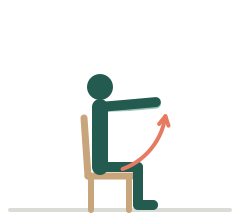
2.Front arm raise
Sit tall. Lift both arms forward to a comfortable height, thumbs up, then lower slowly. Stop below the point where the shoulder pinches.
- Range of motion: 5 to 8.
- Strength later: hold a light can or use a light band.
- Keep the shoulders relaxed, not shrugged.
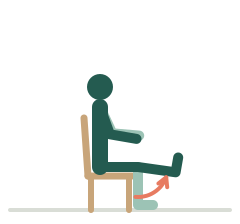
3.Seated knee extension
Sit tall, holding the chair sides. Straighten one knee slowly, pause, and lower. A small pillow under the thigh can make it more comfortable.
- Start: 5 per leg.
- Build to: 10 per leg, with a 2-second pause.
- Strengthens the muscles at the front of the thigh, which support the knee.
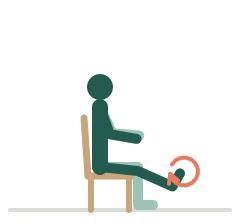
4.Ankle circles and pumps
Seated, lift one foot a little. Circle the ankle slowly each way, then point and flex the foot.
- Range of motion: 5 circles each way, 5 pumps.
- Helpful before standing up after sitting a long time.
- Keep the movement slow and smooth.
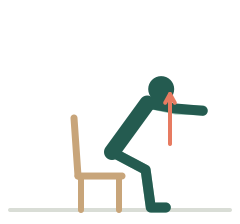
5.Sit to stand (with hand support)
Sit near the front of a firm chair. Lean forward and stand, using your hands on the armrests or thighs as much as you need. Sit down slowly.
- Start: 3 to 5.
- Build to: 8 to 10, with less hand help over time.
- A higher chair or a cushion makes it easier on hips and knees.
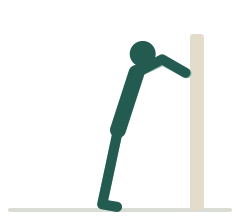
6.Wall push-up
Hands on a wall at shoulder height. Bend the elbows to lean in, then press back. Keep the wrists comfortable; spread the fingers or use a slightly higher hand position.
- Start: 5.
- Build to: 10 to 12.
- Skip if wrists are flaring; try the front arm raise instead.
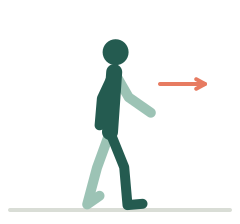
7.Walking
Walking is low-impact and easy to adjust. CDC recognizes the Walk With Ease program, designed for people with arthritis.
- Start: 5 to 10 minutes on an even surface.
- Build to: 30 minutes on most days, in shorter bouts if needed.
- Supportive shoes make a difference.
A gentle 15-minute session
- Warm-up: 3 to 5 minutes of easy walking or a seated march.
- Range of motion: hand and wrist circles, ankle circles, front arm raise (3 minutes).
- Strength: seated knee extension, sit to stand, wall push-up, 1 to 2 rounds (6 minutes).
- Cool-down: slow walking and a few deep breaths (2 minutes).
On flare days, do only steps 1, 2 and 4. On good days, add a walk later in the day.
Classes and programs
Structured programs can make it easier to start. CDC recognizes more than 20 programs for people with arthritis, including the Arthritis Foundation Exercise Program, Walk With Ease and Tai Chi for Arthritis. Ask your doctor, a physical therapist, or a local senior center what is available near you.
Related guides
For seated options, see chair exercises for seniors and the free printable stretch sheet. For joint-friendly strength, light bands in the resistance band guide let you choose a resistance that does not hurt. For aerobic activity, try low-impact cardio.
FAQ
What exercises are good for seniors with arthritis?
Gentle range-of-motion movements, strengthening with a resistance that does not cause joint pain, and low-impact aerobic activity such as walking, cycling, swimming, water exercise or tai chi. Ask your doctor or physical therapist which suit your joints.
Should I exercise when my joints hurt?
On flare days, keep to gentle range-of-motion and save strength work for another day. Stop for sharp pain or a joint that suddenly swells. If pain lasts more than two hours after exercise, do less next time.
Will exercise cure my arthritis?
No. Exercise is not a cure. CDC says physical activity can help many people with arthritis reduce pain and improve function, but results vary, and it works alongside the care your doctor recommends.
How often should I do these exercises?
The Arthritis Foundation suggests range-of-motion and aerobic exercise daily and strengthening every other day. Start with small amounts and build gradually.
Sources
- CDC: About physical activity and arthritis
- CDC: Physical activity and self-management programs for arthritis
- Arthritis Foundation: Exercise and arthritis fact sheet (PDF)
- Arthritis Foundation: Exercise and strength training with arthritis
- Arthritis Foundation: Arthritis Answers toolkit (PDF)
- AAOS OrthoInfo: Managing arthritis pain with exercise