
These five exercises were chosen because each one trains something you use every day: standing up, pushing, balancing, rising onto your toes and walking. CDC lists balance activities such as standing from a sitting position among the activities older adults need each week, alongside muscle-strengthening on at least two days and regular aerobic activity.
A note on “every day”. The daily amounts below are deliberately gentle, so most people can repeat them. On two or three days a week you can do more (two or three rounds) to count as strength training, and keep the other days light. Rest on a day you feel unwell or very sore.
The 5 exercises
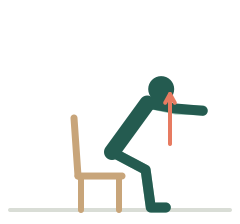
1.Sit to stand
Sit near the front of a sturdy chair, feet under your knees. Lean forward slightly and stand up. Sit down slowly, with control. Use your hands on your thighs or the armrests if you need to.
- Daily dose: 5 to 10.
- Easier: a higher seat or more hand help.
- Harder: slower lowering, or arms crossed.
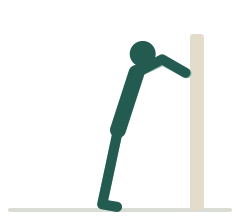
2.Wall push-up
Stand an arm’s length from a wall and place your hands on it at shoulder height. Bend your elbows to bring your chest toward the wall, then press back.
- Daily dose: 5 to 10.
- Easier: stand closer to the wall.
- Harder: step farther back, or use a sturdy counter.
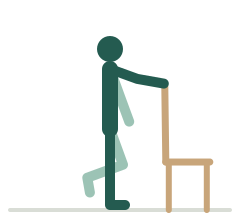
3.One-leg stand with support
Stand beside a counter or chair and hold on. Lift one foot a little off the floor and hold, then switch. Look ahead, not down.
- Daily dose: 2 holds of 5 to 15 seconds per leg.
- Easier: just shift your weight onto one foot.
- Harder: lighter fingertip support.
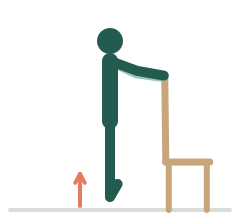
4.Heel raises
Hold the back of a chair or the counter. Rise up onto the balls of your feet, pause, then lower slowly.
- Daily dose: 8 to 10.
- Easier: seated heel raises.
- Harder: a 2-second pause at the top.
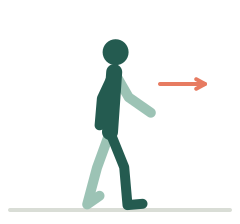
5.Walk
A walk at a comfortable pace, indoors or out. Swing the arms and stand tall.
- Daily dose: 10 minutes, or what you can manage.
- Easier: two 5-minute walks.
- Harder: a brisker pace where you can talk but not sing.
The routine in about 15 minutes
- Walk first (10 minutes) to warm up. If you walk later in the day, march in place for 2 minutes instead.
- Sit to stand: 5 to 10.
- Wall push-up: 5 to 10.
- One-leg stand with support: 2 holds per leg.
- Heel raises: 8 to 10.
Printable checklist
Tick a box each day you do the routine. A full row is the goal, not perfect form or big numbers. Download the one-page checklist (PDF), or print this section.
| Exercise | Mon | Tue | Wed | Thu | Fri | Sat | Sun |
|---|---|---|---|---|---|---|---|
| Sit to stand | |||||||
| Wall push-up | |||||||
| One-leg stand with support | |||||||
| Heel raises | |||||||
| Walk |
When you are ready for more
Each exercise has a fuller guide: chair exercises (more sit-to-stand variations), strength training for seniors (wall push-ups and beyond), balance exercises, and low-impact cardio for the walking part. Want a starting number? Try the 30-second chair stand test and repeat it in a month. A light band from the resistance band guide adds a pulling exercise to balance out the wall push-up.
Safety notes
- Stop for chest pain, faintness, unusual shortness of breath, or sudden joint pain, and seek appropriate medical help.
- If you have osteoporosis, a recent surgery, dizziness, or a fall history, ask a clinician or physical therapist how to adapt these movements.
- Use a sturdy chair without wheels. Put it against a wall if it slides.
- Ordinary muscle effort is fine. Sharp or worsening pain is a signal to stop.
FAQ
Is it OK for seniors to exercise every day?
Gentle daily movement is fine for most people, and walking most days is encouraged. For strength work, two or three harder days a week with lighter days in between gives muscles time to recover.
How long does the daily routine take?
About 15 minutes including a 10-minute walk. Without the walk, the four exercises take about 5 minutes.
What if I cannot stand up without using my arms?
Use your hands on your thighs or the armrests, or try a higher chair. That is a normal starting point. Practice regularly and try using less hand help over time.
Do I need any equipment?
No. A sturdy chair, a wall or counter, and comfortable shoes with good grip are enough.