
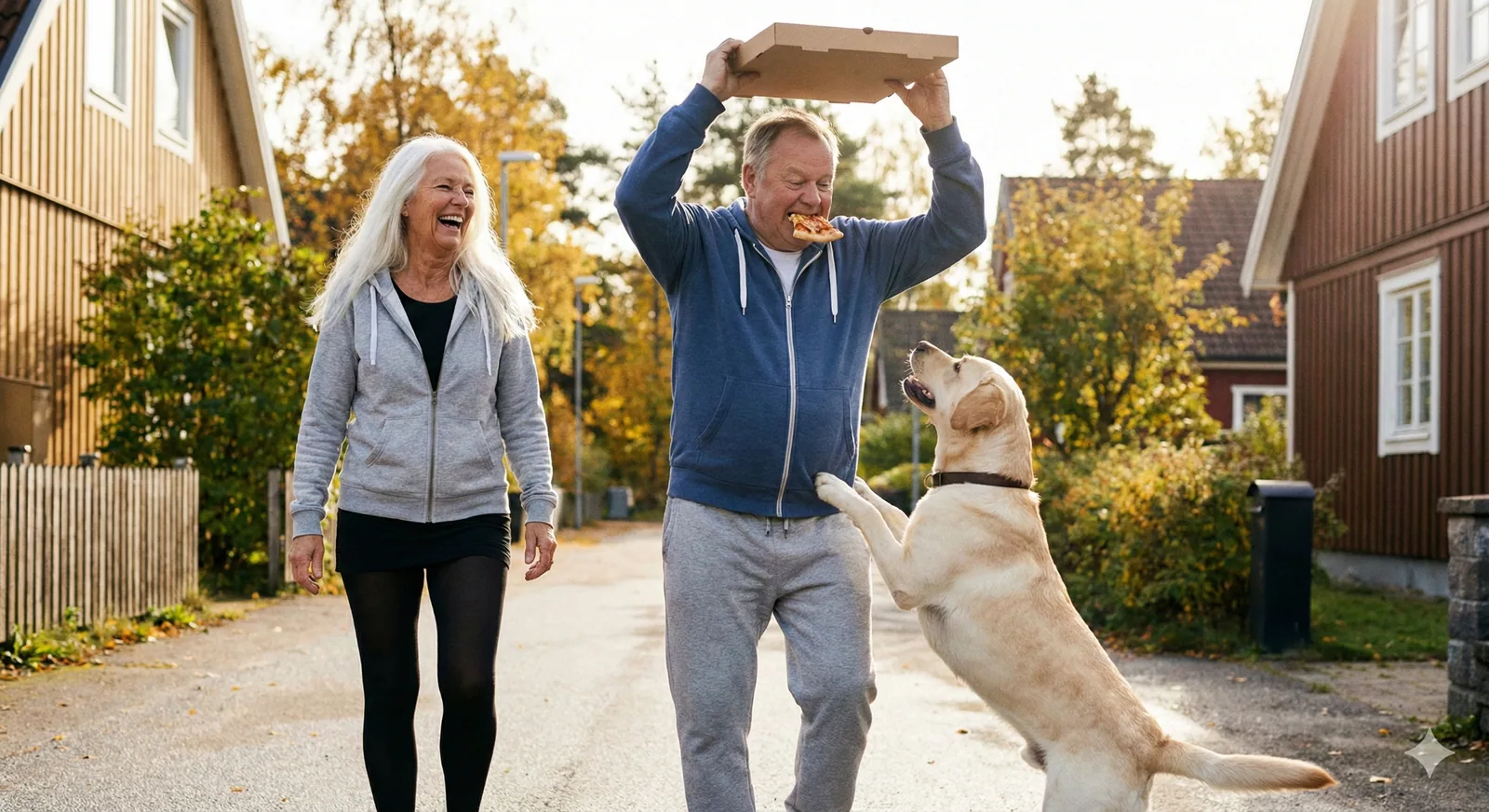
January plans often depend on novelty, guilt and an unrealistic schedule. When normal life returns, the plan has no smaller version.
Build the week you can repeat
Everyday movement needs a place outside the gym. A workout can be valuable, and the rest of the week still matters. A routine can make space for both.
Look for a few natural openings: a walk to an errand, time in the garden, a short movement break or an outing with a friend. Choose activities that fit your circumstances and current ability.
Borrow these three habit ideas
- Make a specific appointment: choose a time and activity, such as a short walk after lunch on Monday and Thursday.
- Have a smaller version: when the full plan is unrealistic, choose a manageable alternative. A busy week need not become an abandoned month.
- Review the obstacle: if a session keeps disappearing, change the time, location or activity before deciding that you lack motivation.
This is an example of planning, not a universal exercise schedule. Build gradually and adapt around recovery.
Give movement a purpose beyond exercise
Feeling useful can give an activity a purpose. You might combine a walk with visiting someone, volunteering or discovering a new neighbourhood. A reason to go out can be more appealing than another target to tick off.
For practical support with starting gradually and staying engaged, see the National Institute on Aging's activity guidance.
Make room for your story
What helped you return to movement after a break? Healthy Agers welcomes ideas for guest contributions about real routines, setbacks and enjoyable activities. info@healthyagers.com; a useful experience is worth sharing even when it is not a dramatic transformation.
Frequency beats intensity (most weeks)
A plan you repeat three modest times usually beats one heroic session that disappears by February. Build the habit of showing up; intensity can grow later if recovery and joints allow.
Natural movement — Blue Zones with care
Popular “Blue Zones” stories highlight places where people often stay active through daily life: walking, gardening, chores and social outings rather than only gym memberships. Treat that as inspiration for environment design, not as a guarantee that copying a diet or village will produce the same lifespan. Context, genetics and healthcare differ.
Give connective tissue time
Tendons and other connective tissues adapt more slowly than enthusiasm. A rough practical rule of thumb many coaches use: expect about two months of consistent, gradual loading before asking tissues for a big jump in volume. If something hurts sharply or swells, ease back and seek advice rather than “pushing through.”
Purpose and community
Movement sticks when it serves a reason — meeting a friend, walking the dog, volunteering, or belonging to a group. See why join a healthy aging community and our healthy aging guide for the wider 80/20 picture.