
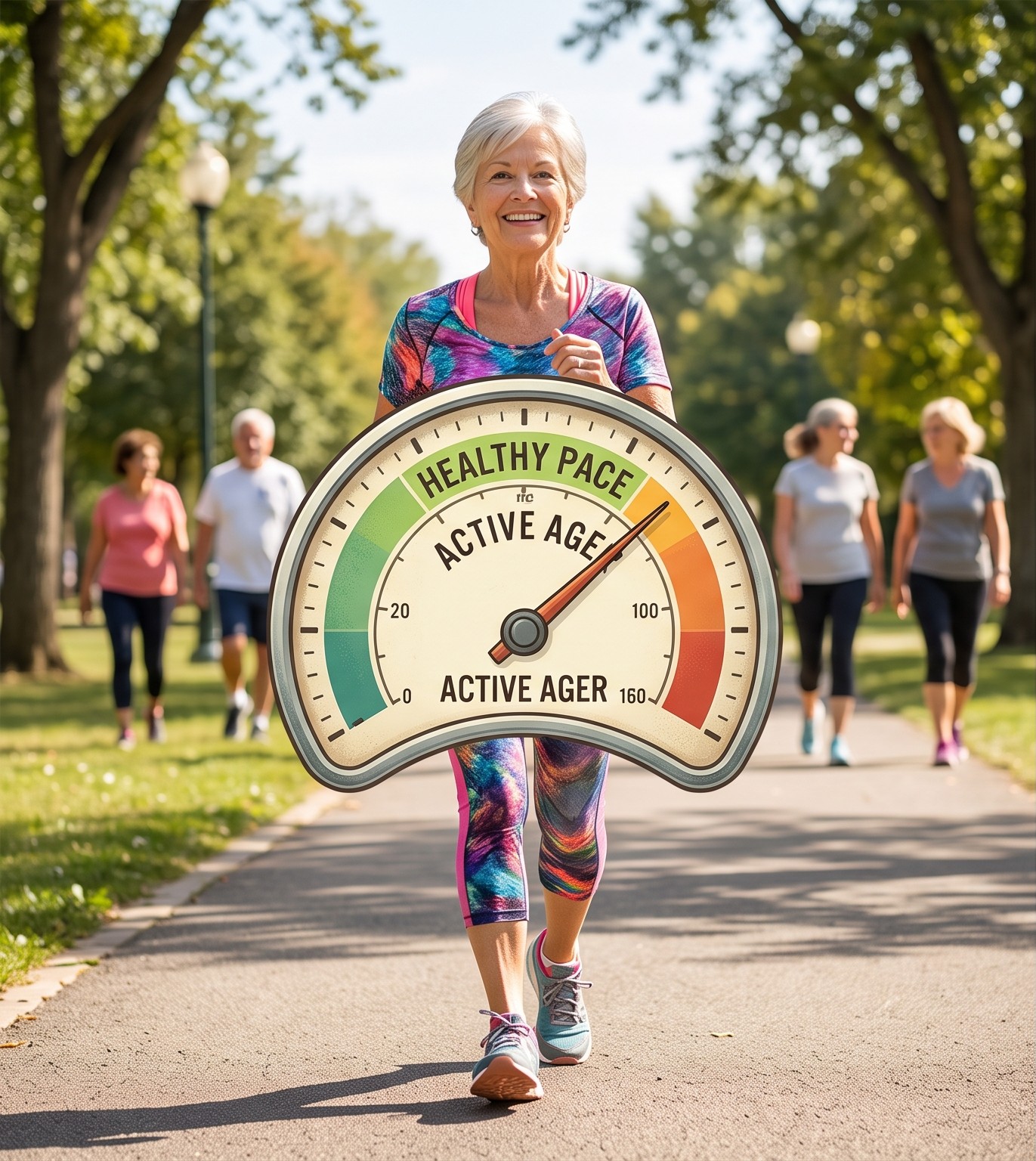
Walking pace is influenced by strength, balance, heart and lung function, pain, confidence, environment and motivation. That is why researchers often use it as one window into function.
A speedometer, with some important limits
Walking brings together balance, coordination, muscle function and the ability to sustain effort. That makes it an interesting everyday observation, but weather, pain, footwear and the walking surface also affect pace.
A pooled analysis of nine studies found an association between gait speed and survival in older adults. It did not establish that deliberately increasing your speed by 0.1 metres per second will reduce your personal risk by 12%. An association across a group cannot predict how long you will live.
Make your next walk a little more purposeful
Choose a familiar, level route and start at a comfortable pace. If it feels appropriate for you, include a short stretch at a slightly brisker pace before easing back. You should remain in control of your steps. A friend or a destination can make the outing more inviting than a stopwatch.
Walking poles are an option if you enjoy them, but technique matters. There is no need to buy equipment before finding a walking routine that works for you.
Notice the experience, not just the number
- Does the usual route feel easier or harder than it did recently?
- Can you walk and talk comfortably?
- Are you more confident on your feet, or have you noticed a new difficulty?
A persistent or sudden change in walking deserves attention, especially with pain, dizziness or new weakness. Do not use an at-home timing test to diagnose yourself or to push through symptoms.
Give your walks a supporting cast
Walking is one part of a movement routine. Explore our movement hub, strength guide and senior-friendly pages on balance and strength. The goal is to keep enjoying the places your feet take you.
Why pace matters as a functional signal
Think of walking speed as one everyday clue about how well strength, balance and stamina are working together — not a personal forecast. If your usual route feels slower or less steady than before, that is useful information for a conversation with a clinician or physiotherapist, especially alongside pain, dizziness or falls.
Chair stands: a simple strength partner
Getting up from a chair uses similar lower-body strength that supports a confident walk. Practise rising from a sturdy chair without using your hands if that is safe for you, or with light hand support if needed. Stop if knees or hips protest sharply. Pair this with ideas from our strength training for seniors and chair exercises guides.
Nordic walking and poles
Walking poles can add upper-body involvement and a sense of stability for some people. Technique matters more than expensive gear: plant the poles lightly, keep shoulders relaxed and let the arms swing naturally. If poles feel awkward, ordinary brisk walking still counts.
A short timed walk — curiosity only
On a flat, familiar path, you might time how long it takes to cover a known distance at a comfortable-brisk pace — once, as a curiosity check, not a diagnosis. Do not chase a target number. Compare only to your own recent experience, and skip the stopwatch if you feel unwell or unsteady. For broader movement ideas, see movement and balance exercises for seniors.