
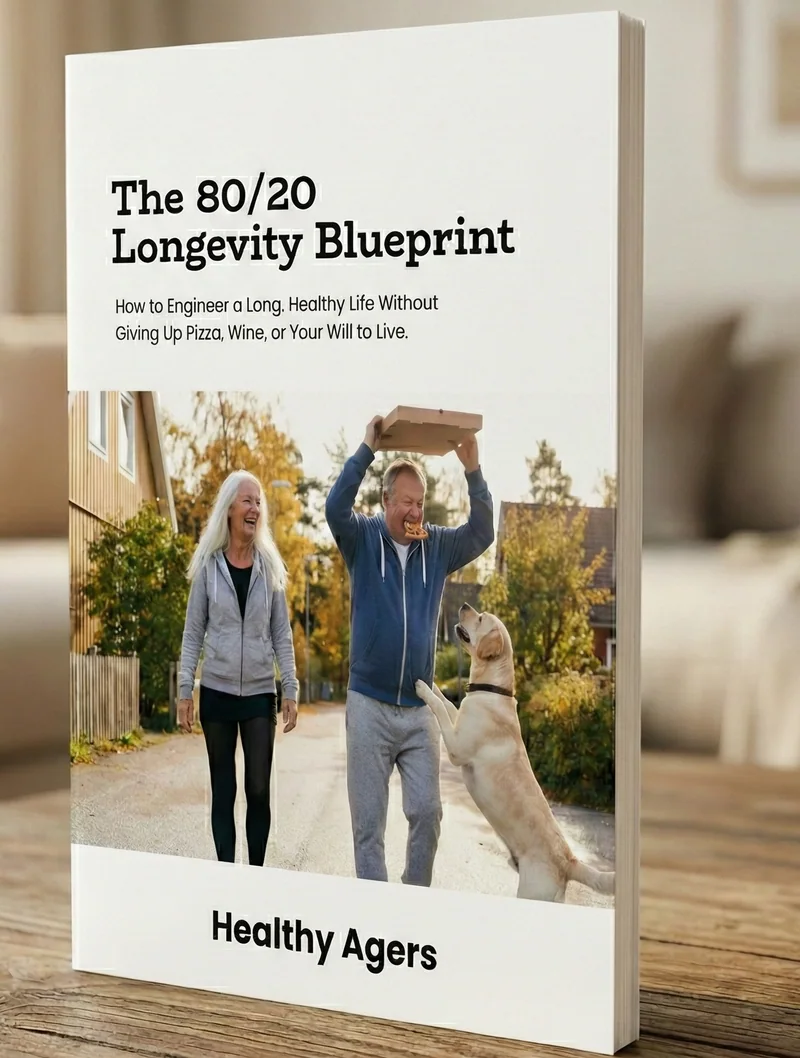
A useful blueprint is not a rigid schedule. It is a set of priorities you can adapt to your body, circumstances and week.
Movement is medicine—but dosage matters
Combine activity that raises your breathing with strength and balance work. Start below the level that overwhelms you and build gradually.
Eat to support capability
Choose mostly minimally processed food, enough protein for your needs, a variety of plants and enough energy to stay active. Do not confuse restriction with health.
Recovery makes adaptation possible
Sleep, rest and lower-stress periods belong inside the plan, especially as training or life demands increase.
People make the plan livable
Connection is both a health factor and a practical tool. Walk with somebody. Cook with somebody. Let somebody know what you are trying to change.
Use the blueprint to choose, not to do everything
Healthy Agers calls this an 80/20 approach: concentrate on a few actions that matter in your life. Treat the numbers as a planning idea rather than a measured promise that a particular effort will produce a fixed health benefit.
Start by asking what you want to keep doing. Carrying shopping, getting out to see friends and enjoying a favourite activity are more personal goals than a score on a dashboard.
Choose the chapter that fits your week
- Everyday strength: use the strength-training guide to explore exercises and an adaptable starting plan. A light band adds variety at home; see resistance band exercises for seniors.
- Easier food decisions: use the shopping list and meal ideas to plan a few meals.
- Recovery: look at your sleep and recovery habits alongside activity.
- Connection: read about contributing to a community or arrange a conversation with someone you enjoy.
Keep prevention personal
Bring questions about screening, medicines or nutrition needs to your healthcare appointments. A useful conversation starts with your circumstances and concerns.
A review that takes a few minutes
At the end of the week, ask: what felt manageable, what made life more enjoyable, and what needs changing? Keep the action that worked. Make the difficult one smaller or choose a different approach. You can use the Lifestyle Tracker as a private reminder rather than a report card.